Read in English below
Après avoir délaissé mon blog – je vous passe une longue liste de mauvaises raisons- me voilà dépoussiérant mes archives avec l’enthousiasme d’une enfant qui redécouvre sa boite de lego. C’est donc avec cette âme d’enfant et le caractère d’une femme de plus de 50 ans aux hormones instables que je reprends mon clavier, mon franglais et mes illusions retrouvées.
Mais par où commencer ?
Le mois de juillet 2024 est déjà riche en émotions, trop riche. Difficile de digérer toutes les informations qui nous tombent dessus en cascade : la guerre en Ukraine qui n’en finit pas de continuer, le climat qui n’arrête pas de changer, les élections en France, les élections aux US of A, les Jeux olympiques, le tour de France, le documentaire de Céline Dion, le temps qu’il fait, le pouvoir d’achat, les kilos en trop avant l’été, le selfie qui n’est pas bien et les villes de Méditerranée qui ne supportent plus leurs touristes. Et pour couronner le tout, une tentative d’assassinat du candidat à la dictature des États-Unis d’Amérique, Donald J. Trump.
Et bé ! Heureusement que c’est l’été et les vacances, sinon, ça pourrait me briser le moral.
Malgré ces temps moroses, notre humeur méfiante et nos colères rentrées, il y a toujours de belles choses dans ce monde. Savez-vous par exemple que la ville de Savonlinna en Finlande organise un championnat de lancer de téléphone portable, et ça, quand on y pense, devrait être un sport obligatoire pour tous.
Peu importe les bonnes nouvelles, rien ne peut arrêter les grincheux de grincer les dents et les fronceurs de sourcils de voir d’un mauvais œil le mal partout. L’Humain est ainsi fait. Nous aimons être négatifs. Râler tous ensemble, nous met de bonne humeur, quand les optimistes et les joyeux chroniques nous agacent profondément. Ils ont le chic de ruiner l’ambiance grave et morose qui est dans l’air du temps.
Cela viendrait du « biais de la négativité », expression que j’ai gentiment récupérée dans une vidéo de « L’esprit critique » que je vous recommande de visionner. Alexis Bellas et son équipe se sont donné pour mission de créer une « boite à idées outil pour développer son esprit critique ». Et moi, bien sûr, dès que l’on me propose de me rendre un peu plus intelligente, je fonce sans réfléchir. Bon, je réalise que j’ai encore beaucoup de progrès à faire.
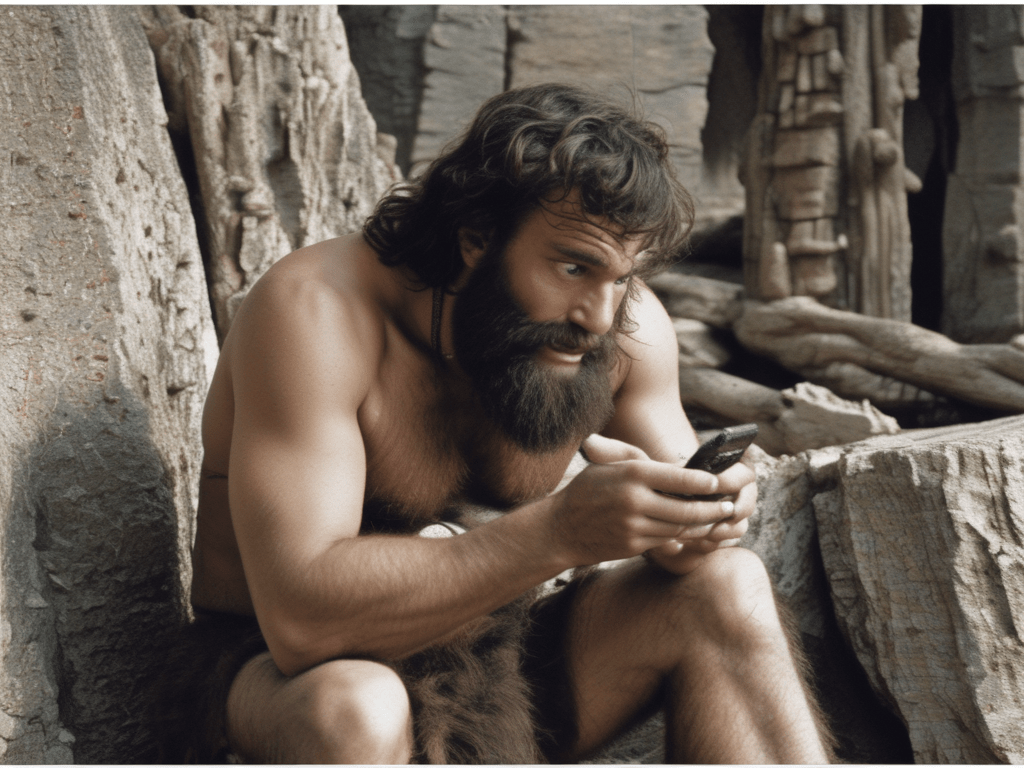
Le biais de négativité nous vient de ces temps pas si lointains où nous vivions encore dans des grottes. C’était le temps d’avant, où les grands animaux dominaient le monde et nous étions leur mets favori. Notre cerveau fonctionne toujours avec les réflexes de survie de nos ancêtres homo sapiens. Ainsi prendre nos jambes à notre cou pour éviter de un lion affamé, nous a surement sauvé la vie plus d’une fois. Notre cerveau continue de percevoir les signaux négatifs de notre environnement comme un danger et nous balance de la peur, de l’anxiété ou de la colère pour nous en protéger. Exemple, je passe une très bonne journée à l’école. Les cours se déroulent facilement et les élèves sont attentifs et participent avec enthousiasme. La dernière classe est perturbée par des gamins fatigués de leur journée. En partant, je ne vais me souvenir que de cette classe et oublier les six autres. Mon cerveau est en alerte toute la journée et réagit version XXL au moindre problème et reste concentré sur le négatif qu’il perçoit comme un danger alors que le positif n’a pas besoin de son attention. Quand tout va bien, pas besoin de s’en faire. D’ailleurs, on n’a plus de mots pour décrire l’enfer et ses tortures que pour décrire le paradis et ses merveilles.
Ainsi, nous les Humains au cerveau si puissant, nous restons fixés sur ce qui ne va pas et négligeons ce qui va bien. Les réseaux sociaux ont fait de cet attrait pour la négativité leur fonds de commerce. Plus nous sommes en colère et plus leur compte bancaire est positif.
Alors, me direz-vous, comment ne pas être négatifs au milieu de tout cela ? Faut-il ignorer ce qui se passe dans le monde pour être heureux ? Peut-être que c’est la solution. « Ignorance is bliss » disent les Américains. « Moins on en sait, mieux on se porte » disent les Français.
Peut-être aussi que l’on pourrait essayer d’être un peu moins préhistorique et contrôler un peu nos émotions primaires. Quand quelque chose nous effraie ou nous met en colère, on pourrait essayer de raisonner un peu. C’est-à-dire de se poser, de regarder l’information avec différentes perspectives, de ne pas vouloir avoir toujours raison, d’accepter de se tromper, d’écouter des opinions différentes et de partager ses idées sans les imposer.
Bon, il y a du boulot, mais on peut être optimiste. Aucun d’entre nous n’est nostalgique de l’époque où nous vivions dans des grottes passant nos soirées à regarder des images sur des murs et à communiquer à coup de gourdin. Oui, pas de panique, on a vraiment bien évolués depuis ce temps-là.
Florence de Pont
Si vous avez aimé ce post, merci de le Liker et de le partager.
Si vous ne l’avez pas aimé, vous pouvez le partager aussi.
Si vous voulez commenter, je vous lirai avec plaisir, mais n’oubliez pas que je suis sensible et que j’ai un drôle sens de l’humour.
Merci !
In English, Please!
The Bias of Negativity and Sapien
After neglecting my blog – I spare you a long list of wrong reasons – here I am dusting off my archives with the enthusiasm of a child rediscovering her Lego box. So, with the soul of a child and the character of a woman over 50 with unstable hormones, I take up my keyboard, my Franglais, and my regained illusions.
But where to begin?
The month of July 2024 is already rich in emotions, too rich. It’s difficult to digest all the information that comes crashing down on us: the never-ending war in Ukraine, the constantly changing climate, the elections in France, the elections in the US of A, the Olympics, the Tour de France, Celine Dion’s documentary, the weather, the cost of living, the extra pounds before summer, the not so good selfie, and the Mediterranean cities that can no longer stand their tourists. And to top it all, an assassination attempt on the candidate for the dictatorship of the United States of America, Donald J. Trump.
Wow! Thankfully, it’s summer and vacation time; otherwise, it could really break my spirit.
Despite these gloomy times, our mistrustful mood, and our pent-up anger, there are still beautiful things in this world. Did you know, for example, that the city of Savonlinna in Finland organizes a mobile phone throwing championship? When you think about it, it should be mandatory to participate for everyone.
No matter the good news, nothing can stop the grumblers from grinding their teeth and the frowners from looking at everything with a critical eye. That’s just how humans are. We love to be negative. Complaining together puts us in a good mood, while optimists and chronically joyous people intensely annoy us. They have a knack for ruining the serious and gloomy atmosphere in the air these days.
This comes from the “negativity bias,” a term I kindly borrowed from a video from “L’esprit critique” that I recommend you watch (sorry it’s in French). Alexis Bellas and his team have set out to create a “toolbox of ideas to develop critical thinking.” And, of course, whenever someone proposes to make me a little smarter, I jump right in without thinking. Well, I realize that I still have a lot of progress to make.
The negativity bias comes from those not-so-distant times when we used to live in caves. It was the time before when large animals dominated the world, and we were their favorite meal. Our brain still operates with the survival reflexes of our Homo sapiens ancestors. So, running for our lives to avoid a hungry lion probably saved us more than once. Our brain still perceives negative signals from our environment as a danger and throws fear, anxiety, or anger at us to protect us. For example, I have a very good day at school. The classes go smoothly, and the students are attentive and participate enthusiastically. The last class is disrupted by tired kids. When leaving, I will only remember that class and forget the other six. My brain is on high alert all day and reacts exaggeratedly to any problem. It remains focused on the negative, which it perceives as a danger, while the positive doesn’t require attention. When everything is fine, there’s no need to worry. In fact, we have more words to describe hell and its tortures than to describe paradise and its wonders.
Thus, humans with such powerful brains remain fixated on what’s wrong and neglect what’s going well. Social media like Facebook have made our attraction to negativity their business model. The angrier we are, the more positive their bank account becomes.
So, you might ask, how can we avoid being negative in the midst of all this? Should we ignore what’s happening in the world to be happy? Maybe that could be the solution. “Ignorance is bliss,” say the Americans. “The less we know, the better off we are,” say the French.
Perhaps we could also try to be a little less prehistoric and control our primal emotions. We could try to reason a bit when something scares us or makes us angry. That means taking a moment, looking at the information from different perspectives, not always wanting to be right, accepting that we can be wrong, listening to different opinions, and sharing our ideas without imposing them.
Well, there’s work to be done, but we can be optimistic. None of us are nostalgic for the time when we lived in caves, spending our evenings looking at images on walls and communicating with a cudgel. Yes, no need to panic; we have truly evolved since then..
No matter the good news, nothing can stop the grumblers from grinding their teeth and the frowners from looking at everything with a critical eye. That’s just how humans are. We love to be negative. Complaining together puts us in a good mood, while optimists and chronically joyous people intensely annoy us. They have a knack for ruining the serious and gloomy atmosphere in the air these days.
This comes from the “negativity bias,” a term I kindly borrowed from a video from “L’esprit critique” that I recommend you watch (sorry it’s in French). Alexis Bellas and his team have set out to create a “toolbox of ideas to develop critical thinking.” And, of course, whenever someone proposes to make me a little smarter, I jump right in without thinking. Well, I realize that I still have a lot of progress to make.
The negativity bias comes from those not-so-distant times when we used to live in caves. It was the time before when large animals dominated the world, and we were their favorite meal. Our brain still operates with the survival reflexes of our Homo sapiens ancestors. So, running for our lives to avoid a hungry lion probably saved us more than once. Our brain still perceives negative signals from our environment as a danger and throws fear, anxiety, or anger at us to protect us. For example, I have a very good day at school. The classes go smoothly, and the students are attentive and participate enthusiastically. The last class is disrupted by tired kids. When leaving, I will only remember that class and forget the other six. My brain is on high alert all day and reacts exaggeratedly to any problem. It remains focused on the negative, which it perceives as a danger, while the positive doesn’t require attention. When everything is fine, there’s no need to worry. In fact, we have more words to describe hell and its tortures than to describe paradise and its wonders.
Thus, humans with such powerful brains remain fixated on what’s wrong and neglect what’s going well. Social media like Facebook have made our attraction to negativity their business model. The angrier we are, the more positive their bank account becomes.
So, you might ask, how can we avoid being negative in the midst of all this? Should we ignore what’s happening in the world to be happy? Maybe that could be the solution. “Ignorance is bliss,” say the Americans. “The less we know, the better off we are,” say the French.
Perhaps we could also try to be a little less prehistoric and control our primal emotions. We could try to reason a bit when something scares us or makes us angry. That means taking a moment, looking at the information from different perspectives, not always wanting to be right, accepting that we can be wrong, listening to different opinions, and sharing our ideas without imposing them.
Well, there’s work to be done, but we can be optimistic. None of us are nostalgic for the time when we lived in caves, spending our evenings looking at images on walls and communicating with a cudgel. Yes, no need to panic; we have truly evolved since then.
Florence de Pont
If you liked this post, please like and share it. If you didn’t, you can still share it.
If you want to comment, I will gladly answer it, but please remember that I am sensitive and I have a weird sense of humor.
Merci !


 Florence de Pont
Leave a comment