
Read in English below
Les Jeux olympiques de Paris sont finis. Pendant deux semaines, les Français se sont réconciliés avec la France et son drapeau et cela donne un peu de tendre nostalgie aux Français de l’autre côté de l’Atlantique. Enfin, je parle surtout pour moi. Quel plaisir de retrouver la France qui vibre, qui s’amuse et qui est fière d’elle-même !
Il est temps maintenant de retourner au sujet qui excite la foule américaine en ce moment.
Depuis maintenant de long, très long mois, les US of A se préparent pour les élections présidentielles qui auront lieu en novembre 2024. Depuis que Kamala Harris remplace Joe Biden en tant que candidate des démocrates, une nouvelle dynamique a saisi la campagne électorale donnant plus d’énergie positive d’un côté et plus de galimatias de l’autre.
Ici ou ailleurs, une élection est un moment d’enthousiasme, de crainte, d’angoisse ou d’espoir comme partout dans le monde. Aux US of A, les deux partis nous disent que l’enjeu de ces élections est la démocratie américaine. Rien que ça.
D’un côté, on nous promets l’installation d’un gouvernement autoritaire, vengeur et incohérent et de l’autre on parle du carnage américain et des hordes de fous furieux prêtes à envahir le pays. Quand on est électeur de base, cela a de quoi mettre la pression.
Et ce n’est que le début! Vivement l’annonce des invasions barbares et de la chute de Rome.
Je m’égare.
Mais, je suis sûre que trépidants et curieux vous vous demandez comment se passent les élections présidentielles aux US of A et pourquoi pas, en France aussi ? Et moi, je m’empresse de vous répondre même si j’ai bien conscience que je parle toute seule.
Mais, d’abord, quand on y pense, à quoi ça sert un président de la République ?
D’abord, on parle de République et non pas de Démocratie. La France et les US of A sont des républiques. En république, le peuple élit des représentants pour le représenter, d’où leur nom. Ce sont eux qui vont prendre les décisions concernant le bien public. En démocratie, le peuple décide directement. Certains diraient « c’est mieux comme ça », ce à quoi je répondrais « imaginer un repas de famille de plus de 48 millions de personnes pour la France et de plus de 150 millions aux U.S. of A., durant lequel tout le monde doit se mettre d’accord sur le choix du dessert. ».
Les représentants de chaque états ou départements portent les voix de leurs constituants à l’Assemblée ou au Sénat. Chacun jugera ensuite de l’efficacité de leurs élus comme il l’entend. Après tout, c’est vous qui votez.
Une république peut ne pas être une démocratie, comme la République populaire de Chine ou une démocratie peut ne pas être une république comme l’ Angleterre où il y a une monarchie avec un parlement de représentants élus. Pas étonnant que l’on s’emmêle les pinceaux.
Pour faire simple. Les France et les US of A sont des Républiques démocratiques représentatives dont le président est élu.
Comme j’essaie toujours de faire une recherche longue et sérieuse quand j’écris mes articles, j’ai demandé à AI, l’intelligence artificielle. C’est comme Google mais avec moins d’énergie dépensée pour consulter des articles et lire les Constitutions dans le texte. Je vis avec mon temps. Elle m’a donné exactement la même réponse pour les deux pays. Comme quoi, l’intelligence artificielle manque un peu d’artifice et elle est aussi un peu superficielle.
En voici le résumé :
« Le président est la chef de l’état et de l’exécutif. Il nomme un gouvernement qui va se charger de l’application des lois votées par le parlement ou le congrès. Il est le chef des Armées et est chargé de la diplomatie. Il est le gardien de la constitution et des institutions. »
Vous me reprocherez sans doute de n’employer que le masculin. Et vous aurez surement raison. Mais, ce blog est censé être bilingue et c’est difficile de traduire l’écriture inclusive. Et puis, la France et les US of A n’ont jamais eu de femme présidente. Je serai ravie d’écrire Madame la Présidente en novembre, mais pour le moment je m’en tiendrai au « le président » neutre et asexué.
Bon, alors ? l’élection du président ? Quelles sont les différences entre la France et les US of A ?
Qui peut se présenter à l’élection présidentielle ?
Selon le code électoral en France, pour se présenter aux élections, les candidats doivent :
- avoir plus de 18 ans
- être de nationalité française
- avoir la qualité d’électeur
- ne pas avoir perdu ses droits par une décision de justice
- avoir fait son service national
- obtenir 500 signatures des parrains et marraines qui sont des élus comme le maire, les députés
- remettre au Conseil constitutionnel une déclaration de situation patrimoniale et une déclaration d’intérêts. C’est-à-dire qu’ils déclarent tous ce qu’ils possèdent pour plus de transparence et pour éviter tout conflit d’intérêts. Cette liste est publiée et accessible par tous ceux qui le souhaitent.
Aux US of A, selon les règles définies par la Constitution de 1787, les candidats doivent :
- être nés citoyens américains
- avoir plus de 35 ans
- habiter aux US of A depuis au moins 14 ans.
Ensuite, les candidats déclarent leur candidature. Une fois qu’ils ont dépensé plus de 5.000 dollars, ils doivent s’inscrire à la « Federal Election Commission » et créer un comité de campagne qui va collecter et dépenser l’argent.
Les pères fondateurs de la Constitution américaine avaient imaginé, je suppose que les gens qui se présenteraient aux élections seraient toujours honnêtes et transparents. Cela a plus ou moins bien fonctionné jusqu’en 2016. On ne peut pas trop leur en vouloir. Qui aurait pu imaginer qu’un Donald Trump pourrait un jour devenir le président des US of A ?

Petits détails amusants
- Emmanuel Macron, le président de la République française, n’a pas fait son service national. Il était de la dernière année de service militaire avant que le service militaire ait été supprimé, mais il a été exempté pour continuer ses études.
- Un repris de justice, condamné par un jury populaire, ne pourrait pas occuper un emploi public aux US of A, mais cela ne l’empêcherait pas de devenir président.
- Donald Trump ne pourrait pas se présenter à une élection en France à cause de sa condamnation par un jury à New York. Il serait inéligible.
- Donald Trump pourrait ne pas pouvoir voter en Floride, un état qui retire le droit de vote au repris de justice. Rassurez-vous, comme Trump est un criminel dans l’état de New York, mais qu’il n’est pas -encore – en prison, il pourra voter en Floride et le gouverneur De Santis l’a garanti. Ouf, on respire, n’est-ce pas ?
Comment se passe l’élection présidentielle ?
En France depuis 1962, le président est élu au suffrage universel. Il est élu pour cinq ans. Il doit obtenir plus de la moitié des suffrages exprimés pour être élu au premier tour. Sinon, il y a un second tour avec les deux candidats qui ont obtenu le plus de voix au premier tour. Les élections ont lieu au printemps.
Aux US of A, le président est élu pour quatre ans. Les deux grands partis nomment leurs candidats durant leur convention nationale et leurs noms sont inscrits sur les bulletins de vote nationaux. Les petits candidats et les candidats indépendants s’inscrivent état par état en suivant les règles en vigueur dans chaque état, comme par exemple, réunir des signatures sur une pétition. Les élections ont lieu le premier lundi du mois de novembre, mais les bureaux de vote peuvent être ouverts des jours ou des semaines avant les élections et il est possible de voter par courrier, selon, là encore, l’état dans lequel on vit.
Ensuite, c’est une sélection d’électeurs et d’électrices, représentants de chaque état qui votent. Les états ont autant d’électeurs que de membres au congrès, c’est-à-dire la maison des représentants (House) et le Sénat. Le décompte se fait au congrès. Un candidat doit avoir plus de 270 votes d’électeurs du collège électoral pour être élu. C’est durant la réunion du Congrès qui devait certifier l’élection de Joe Biden qu’avait eu lieu l’attaque du capitole le 6 janvier 2021 par les supporters de Donald Trump.
Ainsi, il faut se rappeler qu’aux US of A le président n’est pas choisi par le vote populaire. Un candidat qui a le plus de voix peut perdre les élections. Par exemple, Al Gore en 2000 contre GW Bush ou Hillary Clinton en 2016 contre Donald Trump.

Quelle est la meilleure option ? Quelle est la plus représentative ou la plus démocratique ? Je vous laisse décider. Une chose est sure, ce sont les électeurs qui décident.
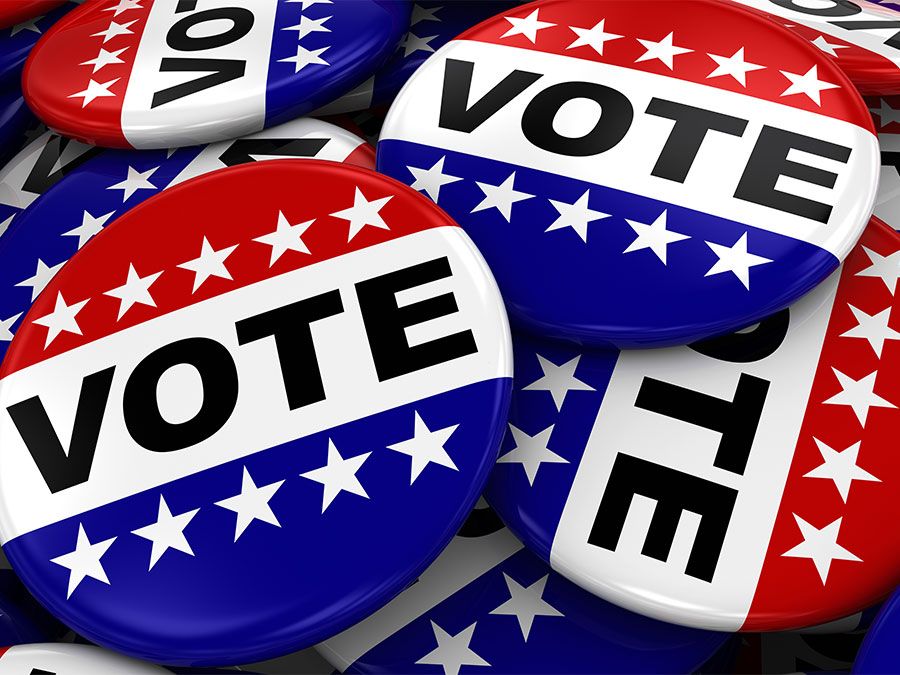
Alors, que vous soyez Français ou Américains, inscrivez-vous sur les listes électorales et votez ! Malgré ce que disent les pessimistes, chaque voix compte.
Faites entendre la vôtre !
Florence de Pont
Si vous avez aimé ce post, merci de le Liker et de le partager.
Si vous ne l’avez pas aimé, vous pouvez le partager aussi.
Si vous voulez commenter, je vous lirai avec plaisir, mais n’oubliez pas que je suis sensible et que j’ai un drôle sens de l’humour.
Merci !
In English, Please!
The Paris Olympics are over. For two weeks, the French reconciled with France and its flag, and it brought a touch of tender nostalgia to the French on the other side of the Atlantic. Well, I’m mainly speaking for myself. What a pleasure to see France vibrant, having fun, and proud of itself!
Now it’s time to return to the topic that excites the American crowd at the moment.
For many, many months now, the US of A has been preparing for the presidential elections in November 2024. Since Kamala Harris replaced Joe Biden as the Democratic candidate, a new dynamic has taken hold of the electoral campaign, bringing more positive energy on one side and more gibberish on the other.
Whether here or elsewhere, an election is a moment of excitement, fear, anxiety, or hope, just like anywhere else in the world. In the US of A, both parties tell us that the stakes of these elections are the American democracy. How sweet. On one side, we are promised that if their candidate loses the election, there will be the establishment of an authoritarian, vengeful, and incoherent government, and on the other side, we hear about the American carnage and hordes of furious madmen ready to invade the country. When you are a random voter, it can be quite stressful.
And that’s just the beginning! I can’t wait for the announcement of barbarian invasions and the fall of Rome.
But, I digress.
I’m sure that you, eager and curious, are wondering how presidential elections are conducted in the US of A and why not, in France as well? And I am eager to answer you, even though I am well aware that I am talking to myself.
But first, when you think about it, what is the purpose of a President of the Republic?
Firstly, we talk about a Republic and not a Democracy. France and the US of A are republics. In a republic, the people elect representatives to represent them, hence their name. It is these representatives who will make decisions concerning the public good. In a democracy, the people decide directly. Some would say, “It’s better that way,” to which I would respond, “Imagine a family meal with more than 48 million people in France and over 150 million in the US of A, during which everyone has to agree on the choice of dessert.”
The representatives of each state or department carry the voices of their constituents to the Assembly or the Senate. Each person will then judge the effectiveness of their elected officials as they see fit. After all, it is you who vote.
A republic may not be a democracy, like the People’s Republic of China, or a democracy may not be a republic, like England where there is a monarchy with an elected parliament. No wonder we get confused.
So, what is the role of the President of the Republic?
As I always try to do thorough research when writing my articles, I asked AI, the artificial intelligence. It’s like Google, but with less energy spent on consulting articles and reading the Constitutions word for word. I keep up with the times. It gave me the exact same answer for both countries. So, artificial intelligence lacks a bit of artifice, and it’s also a bit superficial.
Here is the summary:
“The President is the head of state and the executive. They appoint a government that will be responsible for implementing the laws passed by the parliament or Congress. They are the commander-in-chief of the armed forces and are responsible for diplomacy. They are the guardian of the constitution and the institutions.”
You may reproach me for only using the masculine form in French. And you would probably be right. But, this blog is supposed to be bilingual, and it’s difficult to translate inclusive writing. I would be delighted to write “Madame la Présidente” in November, but for now, I will stick to the neutral and genderless “le président.”
So, what about the election of the President? What are the differences between France and the US of A?
Who can run for the presidential election?
According to the electoral code in France, to run for elections, candidates must:
- be over 18 years old, be French nationals
- have the status of an elector
- not have lost their rights through a court decision.
- have completed their national service
- obtain 500 signatures from sponsors who are elected officials such as mayors or deputies.
- submit a declaration of their financial situation and a declaration of interests to the Constitutional Council. This means that they declare everything they own for more transparency and to avoid any conflicts of interest. This list is published and accessible to anyone who wishes to see it.
In the US of A, according to the rules defined by the Constitution in 1787, candidates must
- be born US citizens
- be over 35 years old
- have been living in the US of A for at least 14 years
Then, candidates declare their candidacy. Once they have spent more than $5,000, they must register with the Federal Election Commission and create a campaign committee that will collect and spend money.
The founding fathers of the American Constitution had imagined, I suppose, that the people running for elections would always be honest and transparent. It worked more or less well until 2016. We can’t blame them too much. Who could have imagined that a man like Donald Trump could one day become the President of the US of A?

Fun facts:
- Emmanuel Macron, the President of the French Republic, has not done his national service. He was in the last year of military service before military service was abolished, but he was exempted to continue his studies.
- Donald Trump would not be able to run for election in France due to his conviction by a jury in New York. He would be ineligible.
- A convicted person, sentenced by a jury, would not be able to hold a public office in the US of A, but that would not prevent them from becoming president.
- Donald Trump might not be able to vote in Florida, a state that revokes voting rights for convicted felons. But don’t worry, as Trump is a criminal in the state of New York, but not yet in prison, he will be able to vote in Florida, and Governor De Santis has guaranteed it. Phew, we can breathe…
How does the presidential election work?
In France, since 1962, the president is elected by universal suffrage. They are elected for five years. They must obtain more than half of the votes cast to be elected in the first round. Otherwise, there is a second round with the two candidates who received the most votes in the first round. The elections take place in the spring.
In the US of A, the president is elected for four years. The two major parties nominate their candidates during their national convention, and their names are listed on the national ballots. Independent candidates and small-party candidates register state by state, following the rules in each state, such as gathering signatures on a petition. The elections take place on the first Monday of November, but polling stations can be open for days or weeks before the elections, and it is possible to vote by mail, again depending on the state in which you live.
Then, it is a selection of electors, representatives from each state, who vote. States have as many electors as they have members in Congress, meaning the House of Representatives and the Senate. The counting is done in Congress. A candidate must have more than 270 electoral votes to be elected. It was during the meeting of Congress that was supposed to certify Joe Biden’s election that the attack on the Capitol took place on January 6, 2021, by Donald Trump’s supporters.
So, it is important to remember that in the US of A, the president is not chosen by popular vote. A candidate who has the most votes can lose the election. For example, Al Gore in 2000 against GW Bush or Hillary Clinton in 2016 against Donald Trump.
Which option is better? Which one is more representative or democratic? I’ll let you decide. One thing is for sure, it is the voters who decide.
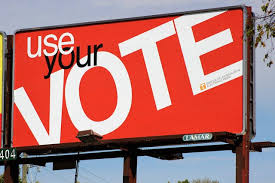
So, whether you are French or American, register on the electoral rolls and vote! Despite what the pessimists say, every vote counts.
Make your voice heard!
Florence de Pont
If you liked this post, please like and share it. If you didn’t, you can still share it.
If you want to comment, I will gladly answer it, but please remember that I am sensitive and I have a weird sense of humor.
Merci !

 Florence de Pont
Leave a comment